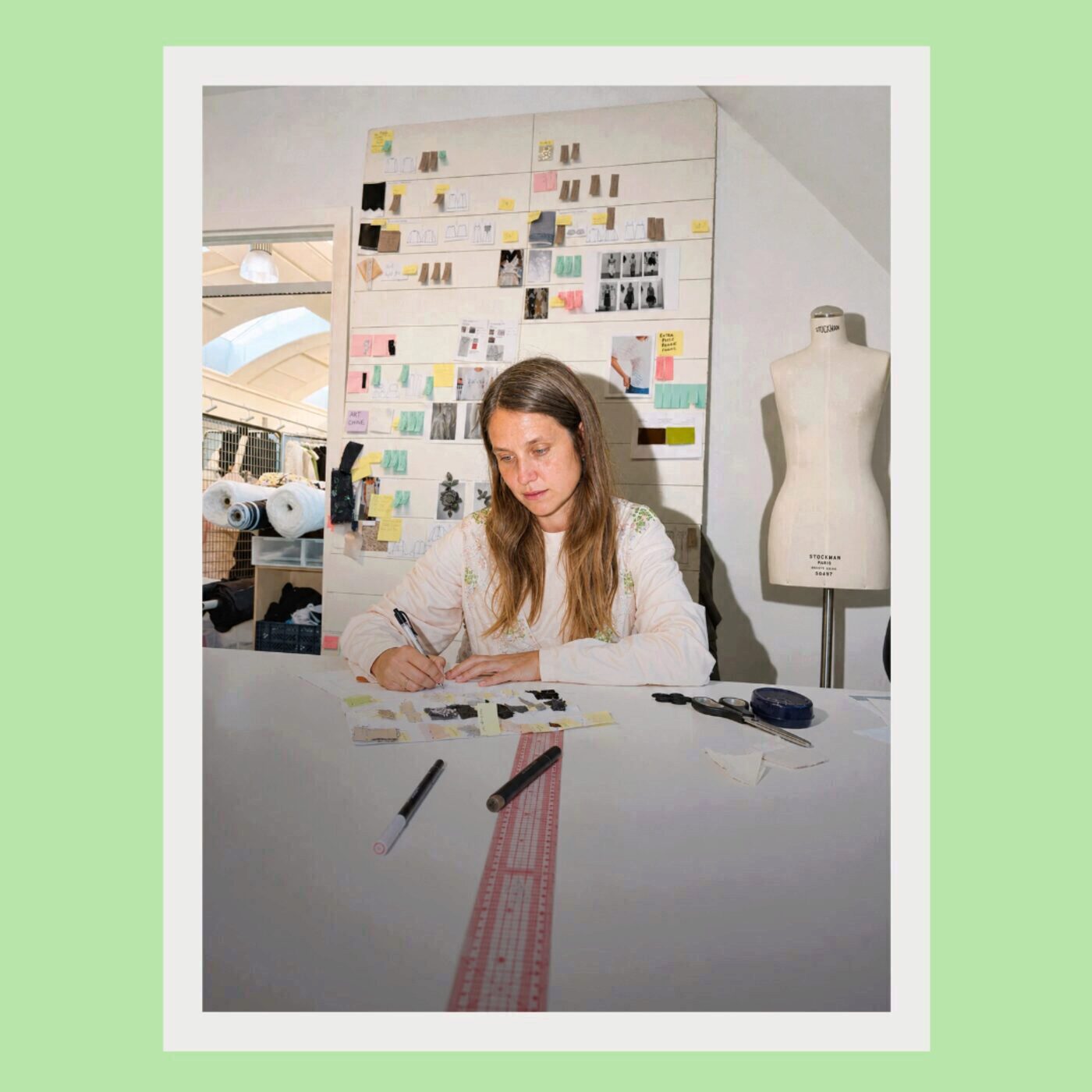
The founder on financing collections, building a team and choosing the partnerships that help a fashion business grow.
In one season, Cecilie Bahnsen’s label reached 27 stockists with a team of around three. She was used to producing ten or fifteen of each piece. The next task was working out how to produce at that scale.
In her Copenhagen atelier, we trace the decisions behind that growth. Dover Street Market bought her first collection. Working in small quantities gave her room to develop production and financing. She describes reinvesting in the collections and the team.
Cash flow has also reshaped the calendar. Moving from two collections a year to four was initially a way to make it more regular. It also created a pace she had not planned. The precollections now explore a broader wardrobe; the runway concentrates an idea.
Growth changed her role, too. Having worked across the business herself, she brought in a CEO who understood her values. For a brand built largely through wholesale, e-commerce, shops and pop-ups have become ways to reach customers directly.
Collaborations test what the company can add without losing its identity. ASICS and The North Face bring technical expertise. With UNIQLO, two flowers on a white T-shirt pose a different question: how little does it take for a product to remain recognisably hers?
The product still sets the terms. Everyday Couture means elaborate clothes worn in ordinary life, across seasons. In the shop, a jacket from one collection can meet a skirt from another. In the atelier, a fabric from her first season is still being reinterpreted.
A conversation about building the organisation around a distinctive product: financing its development, choosing where to sell it and learning which responsibilities to share.
In this episode, you’ll discover:
- How Dover Street Market’s first order helped her develop production.
- What 27 stockists meant for a team of around three.
- Why cash flow pushed the brand from two collections a year to four.
- How precollections and runway shows serve different creative purposes.
- What she looked for in a CEO.
- How direct sales complement a business built through wholesale.
- Why a shop lets the brand show more than a buyer’s selection.
- What ASICS, The North Face and UNIQLO add to the product.
- Why creative freedom matters when choosing a partner.
- How she keeps earlier collections relevant as the range grows.
TIMELINE
01:33 : Archive fabrics, denim and the Copenhagen atelier
09:35 : Early influences, from her grandmother to Galliano and Erdem
18:00 : Returning to Copenhagen to build an international brand
22:13 : Dover Street Market and the leap to 27 stockists
25:38 : Four collections a year, the cash flow decision
27:05 : Everyday Couture, from textile to wardrobe
33:12 : ASICS, The North Face and the case for creative freedom
36:02 : Paris Fashion Week and the purpose of a show
48:10 : The founder, the CEO and a business built on wholesale
53:45 : Why her luxury shop takes cues from skate shops
55:36 : A Magazine Curated By, family and femininity
1:03:04 : Building a house and making room for new ideas
1:07:17 : AI and the value of making mistakes
1:08:46 : UNIQLO, a white T-shirt and two flowers
1:12:06 : Passing the baton
Distribué par Audiomeans. Visitez audiomeans.fr/politique-de-confidentialite pour plus d'informations.